
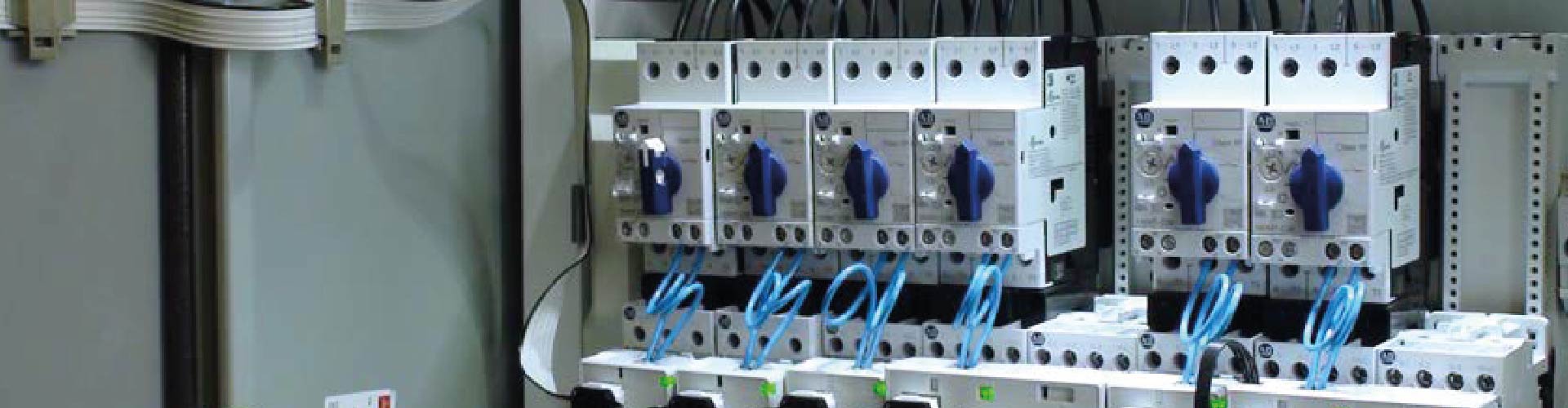
Industrial control cabinets are becoming more compact, more connected and more data-driven. For machine builders, panel builders, system integrators and manufacturing companies, this means rethinking one of the most traditional parts of the automation architecture: the wiring inside the cabinet.
Rockwell Automation’s EtherNet/IP™ In-Cabinet solution introduces a smarter way to connect traditionally hardwired components inside the control cabinet, helping reduce wiring complexity, save space and improve access to real-time device information.
For industrial applications where installation time, reliability, maintainability and scalability matter, this is not just a cabling improvement. It is a practical step towards a more efficient and connected automation infrastructure.
A different approach to cabinet wiring
Traditional control cabinets often rely on point-to-point wiring. Each push button, starter, protection device or field component requires dedicated connections, with a direct impact on design time, assembly work, troubleshooting and future modifications.
The EtherNet/IP In-Cabinet solution replaces much of this complexity with a compact 7-conductor flat cable that combines communication, switched power, Single Pair Ethernet and device connection in a single in-cabinet infrastructure.
The result is a cleaner and more efficient cabinet architecture, designed to support:
- up to 80% reduction in wiring time;
- simpler cabinet assembly;
- fewer wiring errors;
- reduced use of copper and plastic;
- more compact and easier-to-maintain panels;
- faster installation and commissioning.
For panel builders and system integrators, this means fewer repetitive wiring operations and more time available for higher-value engineering work. In other words: less cable gymnastics, more automation strategy.
Multi-drop topology for scalable cabinet architectures
EtherNet/IP In-Cabinet supports a multi-drop topology, allowing compatible devices to be connected over distances up to 25 metres, with up to 40 devices on a single line.
This architecture helps reduce the need to wire every component individually back to the controller or to dedicated terminal blocks. Instead, devices inside the cabinet can be connected through a more flexible and modular communication structure.
This is particularly useful when designing:
- modular machines;
- compact control cabinets;
- repeatable panel layouts;
- systems that may require future expansion;
- applications where installation and maintenance time must be reduced.
A cabinet designed with fewer traditional connections is also easier to document, inspect, modify and support over time.
EtherNet/IP inside the cabinet: from wiring to data
The solution is based on EtherNet/IP™, a widely adopted industrial Ethernet protocol for real-time automation applications. The EtherNet/IP In-Cabinet solution is also ODVA approved, supporting interoperability across compatible industrial devices.
This makes it possible to bring traditionally hardwired cabinet components into the network, including:
- operator push buttons and control devices;
- motor starters and motor control components;
- motor protection devices;
- sensors and I/O components;
- PLCs, HMIs and supervision systems.
The control cabinet becomes more than a physical wiring point. It becomes a connected part of the industrial network, able to provide information that can support operation, diagnostics and maintenance.
Better visibility for maintenance and operations
When cabinet components are connected through an industrial network, maintenance teams can access more useful information directly from the system.
With EtherNet/IP In-Cabinet, real-time data from devices can support:
- continuous device status monitoring;
- faster troubleshooting;
- improved fault diagnostics;
- reduced downtime;
- more proactive maintenance activities;
- better visibility across machine and cabinet assets.
For industrial operations, this means fewer blind spots inside the cabinet and a more structured approach to maintenance. Less “open the panel and start guessing”, more data-driven decision making.
Integrated configuration with Studio 5000
Rockwell Automation’s EtherNet/IP In-Cabinet solution integrates with Studio 5000® Logix Designer, allowing configuration, device identification and diagnostics to be managed from a unified software environment.
This enables users to:
- configure compatible devices more efficiently;
- access device and asset information;
- use diagnostic data to support troubleshooting;
- simplify logic programming;
- build scalable architectures with centralised control.
For companies already using Rockwell Automation control platforms, this integration helps reduce the number of separate tools and manual steps required during engineering, commissioning and maintenance.
Main components of the EtherNet/IP In-Cabinet architecture
The solution includes specific components designed to bring industrial communication inside the control cabinet, such as the 1834-AENTR EtherNet/IP gateway, the 1486 flat cable and connectors, together with 100-E and 104-E communication interface connectors.
It can be integrated with several Allen-Bradley component families, including:
- E300 electronic overload relays;
- 100-E IEC contactors;
- 140MT motor protection circuit breakers;
- 800F 22 mm round push buttons;
- compatible modules and interfaces for in-cabinet applications.
Who can benefit from EtherNet/IP In-Cabinet?
The solution is designed for different players across the automation value chain.
For machine builders, it supports the development of more compact, repeatable and scalable machine architectures.
For panel builders, it helps reduce wiring work, optimise cabinet layouts and improve production efficiency.
For system integrators, it provides a flexible platform for designing automation systems that are easier to expand, commission and troubleshoot.
For end users, it supports improved system visibility, easier maintenance and reduced operational complexity.
Industrial sectors and application areas
EtherNet/IP In-Cabinet is suitable for industrial environments where cabinet space, installation time and system reliability are critical, including:
- food & beverage;
- paper industry;
- consumer packaged goods;
- life sciences;
- material handling;
- machine automation;
- modular production lines.
In these environments, simplifying cabinet design is not a minor technical detail. It can directly affect commissioning time, maintenance efficiency and long-term system flexibility.
More compact cabinets, less material, smarter design
Reducing point-to-point wiring also means reducing the amount of copper, plastic and connection material required inside the cabinet. This contributes to more compact panel designs and helps limit waste during assembly.
At the same time, integrated diagnostics can reduce unnecessary component replacement and support faster fault identification. The overall result is a cleaner, more sustainable and more maintainable approach to industrial cabinet design.
EDGE Greece supports industrial companies in choosing the right automation architecture
EDGE Greece supports industrial companies, machine builders, panel builders and system integrators in the selection and integration of Rockwell Automation technologies for industrial automation applications.
EtherNet/IP In-Cabinet is particularly relevant for companies aiming to modernise control cabinet design, reduce wiring complexity and move towards a more connected, scalable and data-oriented automation infrastructure.
Are you planning a new control cabinet or modernising an existing automation system?
Contact EDGE Greece to learn more about Rockwell Automation’s EtherNet/IP In-Cabinet solution and evaluate how it can support your next industrial automation project.